On this page

The short answer
If you just want the number: most bulk SMS providers in Nigeria charge around ₦6.99 per SMS, sometimes a little less if you buy a large bundle of units upfront. So a campaign to 5,000 customers costs roughly ₦35,000 in message fees alone — and you pay that again every time you send.
That's the honest headline. But “cost per SMS” isn't the whole story, because the per-message rate is only one part of what you actually end up paying — and for a business sending at any real volume, it's often not even the part that hurts most. Here's the full picture.
How bulk SMS is usually priced in Nigeria
The standard model is pay-per-message. You buy a balance of “units” or “credits,” and each SMS you send deducts from it. The rate per unit usually depends on:
- How many you buy at once — bigger upfront bundles drop the per-unit price slightly
- Which network you're sending to — some providers price MTN, Airtel, Glo and 9mobile differently
- Whether you want a custom sender name — sending as “MYSTORE” instead of a random number often costs extra (more on that below)
This works fine when you're sending a few hundred messages a month. The problem is that the model scales against you: your cost rises in a straight line with your success. Reach twice as many customers, pay twice as much. Send a campaign every week instead of every month, pay four times as much. There's no point at which sending more gets cheaper per message in any meaningful way — the meter just keeps running.
The hidden costs nobody puts on the pricing page
The per-SMS rate is the number providers advertise. These are the ones that tend to show up later:
- Sender ID registration. Want your messages to come from a recognizable name rather than a random shortcode? Many providers charge a one-time or recurring fee to register that sender ID, and approval can take days.
- Minimum top-ups. Some platforms require you to buy a minimum bundle of units to start, so you're paying for capacity you may not use yet.
- Unit expiry. On some platforms, unused units expire after a period — meaning credits you paid for can simply vanish if you don't send fast enough.
- Per-network price differences. A “₦X per SMS” headline rate sometimes applies only to one network, with others priced higher.
None of this is to say per-message providers are dishonest — it's just that the advertised rate and the real monthly cost are usually two different numbers. When you're comparing options, the question that matters isn't “what's the per-SMS rate,” it's “what will I actually pay per month at my real volume, all-in.”
Per-message vs flat-rate: which is actually cheaper for you?
SMSDora uses a different model: a flat monthly fee per connected Android phone (from $12/month), with no per-message charge. Send 100 messages or 100,000 through that phone, and the bill is the same.
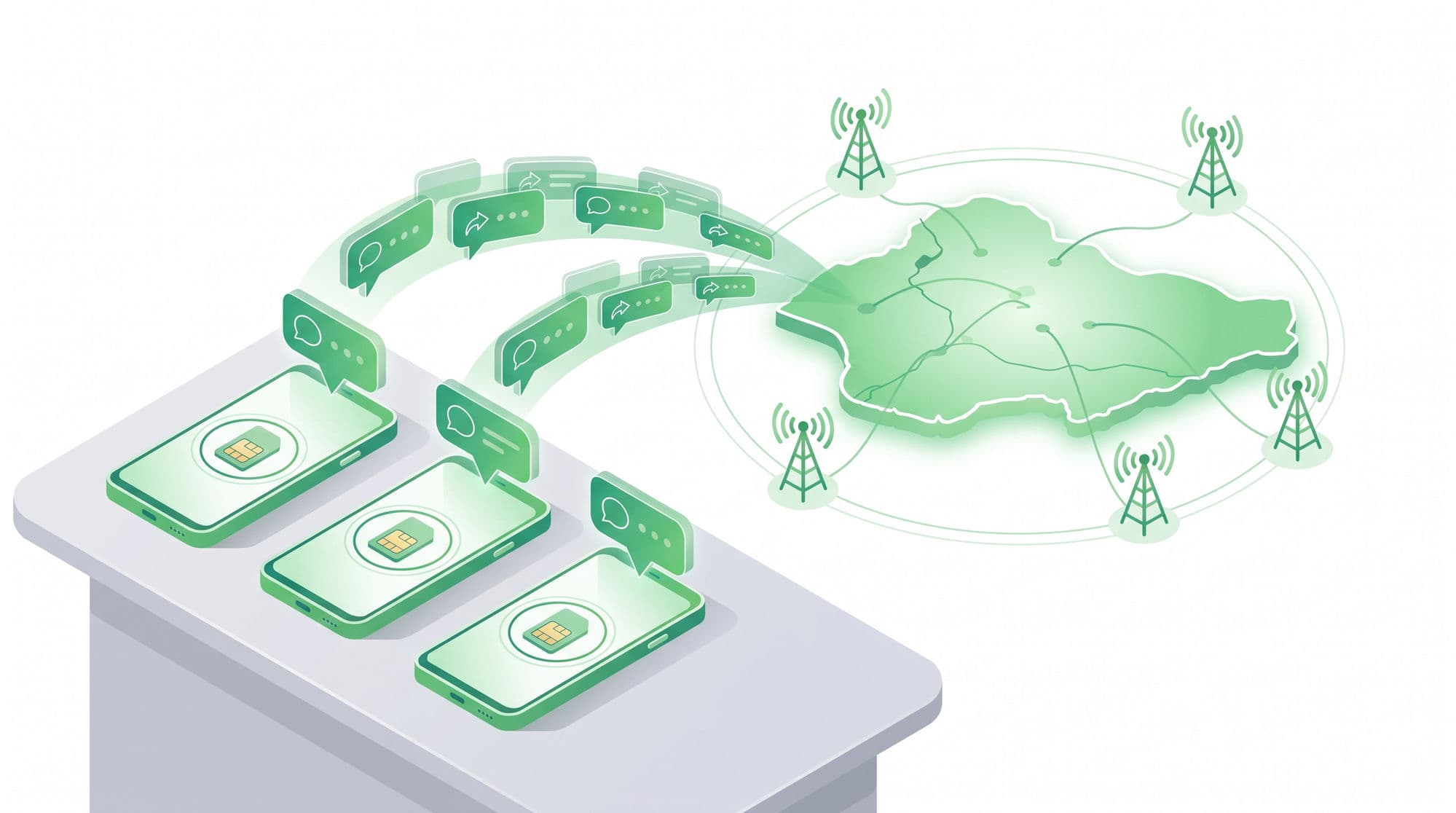
Whether that's cheaper than per-message pricing depends entirely on your volume. Here's the per-message cost stacking up against a flat fee, so you can see where the lines cross for your own send volume:
| Monthly volume | Per-message provider (@ ₦6.99/SMS) | SMSDora |
|---|---|---|
| 1,000 SMS | ₦6,990 | Flat monthly rate, unchanged |
| 5,000 SMS | ₦34,950 | Flat monthly rate, unchanged |
| 10,000 SMS | ₦69,900 | Flat monthly rate, unchanged |
| 50,000 SMS | ₦349,500 | Flat monthly rate, unchanged |
The pattern is the point: per-message cost climbs forever, flat-rate doesn't move. At low volume, per-message can be cheaper — if you send a few hundred messages a month, a pay-as-you-go provider may cost you less, and we'd rather be honest about that than pretend otherwise. But the moment you're sending consistently at volume, flat-rate pulls ahead and keeps pulling ahead the more you send.
So what's the cheapest option?
“Cheapest” depends on which trap you're trying to avoid:
- If you send low volume occasionally, a pay-per-message provider with no minimums is probably your cheapest route — just watch for sender ID fees and unit expiry.
- If you send regularly or at volume, a flat-rate model like SMSDora is almost always cheaper over a month, because your cost stops scaling with the number of messages.
- If you're building a product that sends automatically (OTPs, alerts, confirmations), flat-rate matters even more, because automated sending tends to grow quietly — and on per-message pricing, that's a bill that grows with it.
To be straight about it: if you only send a few dozen messages a month, you honestly don't need SMSDora yet — a pay-as-you-go provider will cost you less, and we'd rather tell you that than sell you something you won't use. SMSDora starts making sense once you're sending enough that per-message fees become a real line on your budget.
The thing worth remembering: the cheapest per-message rate and the cheapest monthly bill are not the same thing. A low advertised rate can still produce a high monthly cost once volume and hidden fees are in. Work out your real monthly total at your actual send volume before deciding — that's the number that matters.